


Director and screenwriter Christopher Nolan’s films traditionally offer a grand and sophisticated spectacle and it’s no different with his latest, writes Lukáš Vaněček. Fascinated by quantum physics and captivated by the story of the “father of the atomic bomb” he decided to bring the history of devastating weapon to the cinematic screen.
Based on the Pulitzer-winning book American Prometheus the narrative is framed by retrospective passages from a hearing in 1954, during which a committee examines the past of Robert Oppenheimer (Cillian Murphy) and his communist wife (Emily Blunt). Concurrently, we observe the efforts and political struggle for a senatorial position in 1958, with Admiral Lewis Strauss (Robert Downey Jr.) vying for the role. And as if that weren’t enough, in the meantime, we gain insight into the life of the astrophysicist and the development of the nuclear bomb referred as the Manhattan Project during the (pre)war period.
Oppenheimer could aptly be likened to an atomic bomb. It impresses the viewer from a distance with its grandeur (not just in terms of the star-studded cast) and captivates their gaze on the screen. After a moment of silent awe, however, a tremendous pressure wave arrives in the final third, propelling you away. The music plays a perfect role in this, drawing significantly from both quiet and loud motifs, ultimately creating an audiovisual masterpiece mixed with feelings of tension and emotion.
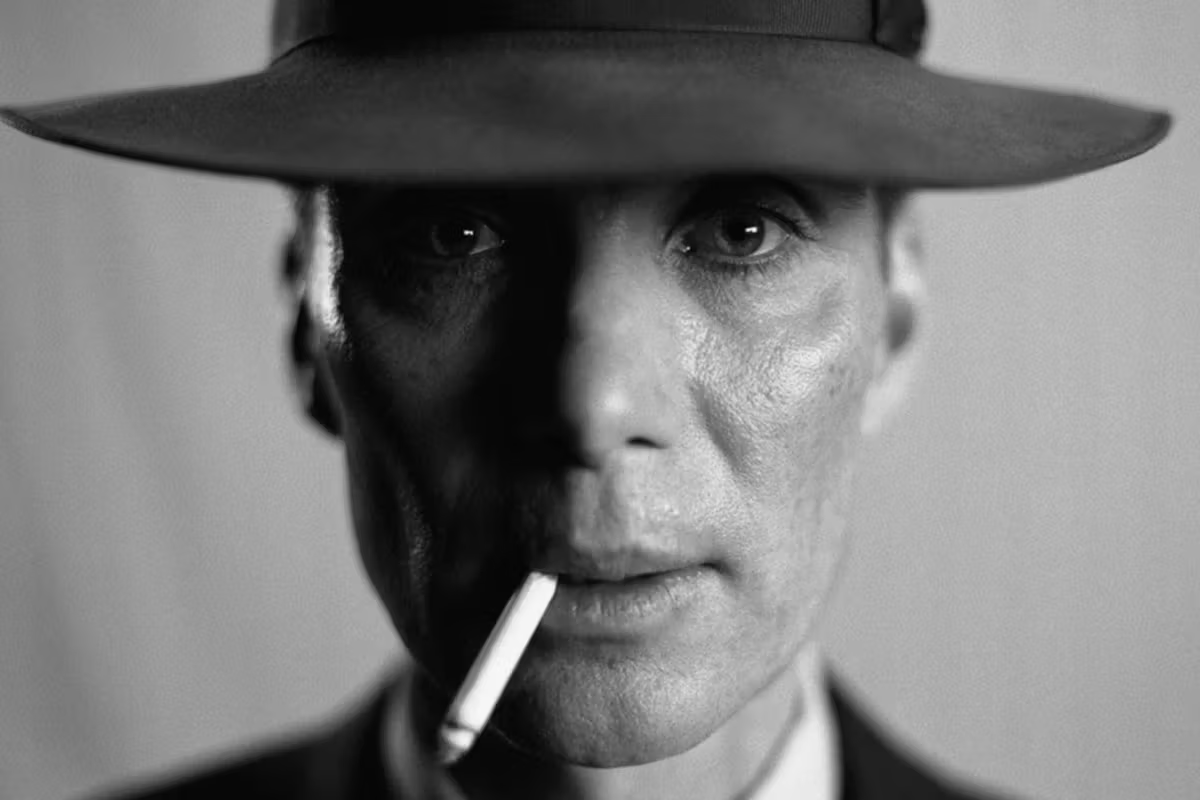
The plot revolves around the character of Oppenheimer, and it’s hard to imagine anyone portraying this role as masterfully as Murphy with his piercing eyes. Emily Blunt, Matt Damon, Robert Downey Jr., and Florence Pugh deliver excellent performances, but they don’t surpass their colleague.
The film’s pace is exhausting. Nolan throws one dialogue after another, presenting an almost tedious number of characters, often without providing context, causing not only the characters but also potential historical details to fade into the background.
The 180-minute runtime passes relatively quickly due to the established rhythm, yet there is a lingering sense that it could have been trimmed further. Improved orientation is facilitated by the clever alternation of colourful and black-and-white passages, effectively distinguishing perspectives throughout the film. Some scenes appear arbitrary, seemingly included just to prevent them from remaining on the cutting room floor.
Craft-wise, from a filmmaking perspective, there is nothing to criticise. Within its genre and considering its intended message, the biopic unquestionably stands out in terms of quality. However, when compared to Nolan’s other visionary movies, it doesn’t rank among the very best.


